Search
Close this search box.

Talk to us

News & Events

THE RELATIONSHIP BETWEEN FOOD WASTE AND ESG GOAL

Managing FOOD WASTE is beneficial for any business from: Environmental - Social - Governance

By implementing Source Reduction of Food Waste, businesses not only reduce environmental impact but also contribute to sustainable development goals and uphold ESG (Environmental, Social, Governance) commitments. This can also enhance the company’s reputation and trust among customers and shareholders.


FOOD WASTE RECYCLING SOLUTION

✅ Exclusive Acidulo® Microbial Technology

✅ Quick 24-hour recycling

✅ Produces nutrient-rich organic fertilizer medium

The Current State of Food Waste and Food Loss in Vietnam

According to a report by the World Bank (WB):

Out of every 10 tons of waste in Vietnam, 5-8 tons are biodegradable organic waste, the majority of which is food waste.

According to Saigon Economic Times:

The total loss due to food waste in Vietnam is estimated to be around 8.8 million tons, equivalent to 3.9 billion US dollars, approximately 2% of Vietnam’s GDP.


ESG Goals: Challenges and Opportunities for Businesses

ESG( Environmental, Social, Governance) goals are becoming a critical part of many businesses’ strategies today. It’s not just a commitment to environmental and social protection but also presents numerous challenges and opportunities for enterprises.

How does food waste recycling help businesses achieve ESG goals?

Environment:

Recycling food waste at the source is a crucial solution to minimize negative environmental impacts and optimize waste management. Through this method, businesses can reduce the amount of waste sent to landfills, minimize greenhouse gas emissions from organic waste decomposition, and decrease the energy required for waste transportation and disposal.

Social:

Improving Community Health:

By reducing waste and disease-causing bacteria, recycling food waste at the source helps improve the health and quality of life for the surrounding community.

Climate change significantly impacts human health, causing diseases related to: Respiratory disease, Cardiovascular disease, Insect-borne disease.

Creating Jobs and Education:

This recycling initiative creates employment opportunities for workers involved in sorting and recycling processes, while also raising awareness and educating the community about the importance of environmental protection.

Governance:

Enhancing Public and Partner Visibility:

Publicizing recycling efforts is a highly effective way to promote a company’s image without requiring substantial costs for marketing. This can yield benefits in building relationships with business partners, attracting and retaining investors, and engaging sustainability-focused customers.

Enhancing Business Operations Efficiency:

Employees increasingly seek out companies committed to environmental and social responsibility. This not only attracts talent but can also foster a more positive work environment and increase labor productivity.

Reducing Costs and Optimizing Resources:

Recycling food waste at the source helps reduce waste disposal costs. Instead of transporting large volumes of waste to central processing facilities, processing it on-site saves transportation and processing costs, while optimizing resource utilization.

How Food Waste Impacts the Environment and Businesses?

ENVIRONMENT:

Greenhouse Gas Emissions:

Food waste, when decomposing, generates methane gas, a greenhouse gas more potent than CO2. This contributes to increased greenhouse effect and plays a role in climate change.

Pollution:

In addition to causing air, soil, and water pollution, uncontrolled food waste and nutrient runoff affect human health and wildlife.

Using resources:

The production, transportation, and disposal of food waste require significant water and energy resources.


BUSINESSES:

Operating costs:

Handling and disposing of food waste increases business operating costs, including labor, transportation, processing, and disposal expenses.

Work environment and health:

The odor from food waste can reduce the air quality in workspaces and create discomfort for employees. If not properly managed, food waste can lead to mold and harmful bacteria, affecting the health of employees.

Legal and Compliance:

Many countries have strict regulations regarding the handling of food waste. Non-compliance can lead to fines and adversely affect the reputation of the business.

ECO Solutions partners with businesses to implement ESG by providing food waste recycling solutions

Hot Events

Managing food waste during the rainy season is a serious issue across urban and rural areas worldwide. The rainy season creates unique challenges for food waste disposal due to several reasons: 👉 Increased Biological Decomposition: The wet and warm conditions during the rainy season accelerate biological decomposition, causing unpleasant odors and attracting disease-carrying insects if not properly managed. 👉 Environmental...
This isn’t just a number, it’s a reality that 𝓜𝓲𝓮̂𝓷 𝓡𝓮𝓼𝓽𝓪𝓾𝓻𝓪𝓷𝓽 deeply understands as they step into 2025. Instead of celebrating with decorations or grand openings, they’ve chosen to start the new year with something more profound: pure, fresh air in every breath. At ECO Solutions Vietnam we are honored to partner with Miên Restaurant in their New Year initiative,...
Have you ever thought that small actions in daily life, like recycling food waste, could make a big difference for the environment? Join ECO Solutions in spreading the message of green living and take part in protecting our planet right from your home! 🎁 Campaign Period: From November 7 to November 25, exclusively for customers using Oklin GG-02 or SmartCara...
Grease sludge in drainage pipes is a common and serious issue in today's wastewater management systems. But is grease sludge actually considered waste? This article will analyze various aspects to clarify this question. What is Grease Sludge in Drainage Pipes? Grease sludge is a special type of waste formed by the accumulation of oils, organic waste, and other residues in...
Trong ngành F&B (Ngành Thực phẩm và Đồ uống), các vấn đề như đường ống thoát nước bị tắc do dầu mỡ và mùi hôi từ cống rãnh là những thách thức thường xuyên. Pizza 4P's cũng không ngoại lệ. Với mục tiêu kinh doanh bền vững và mục tiêu lâu dài là bảo vệ môi trường, họ đã đặt...

Other Events

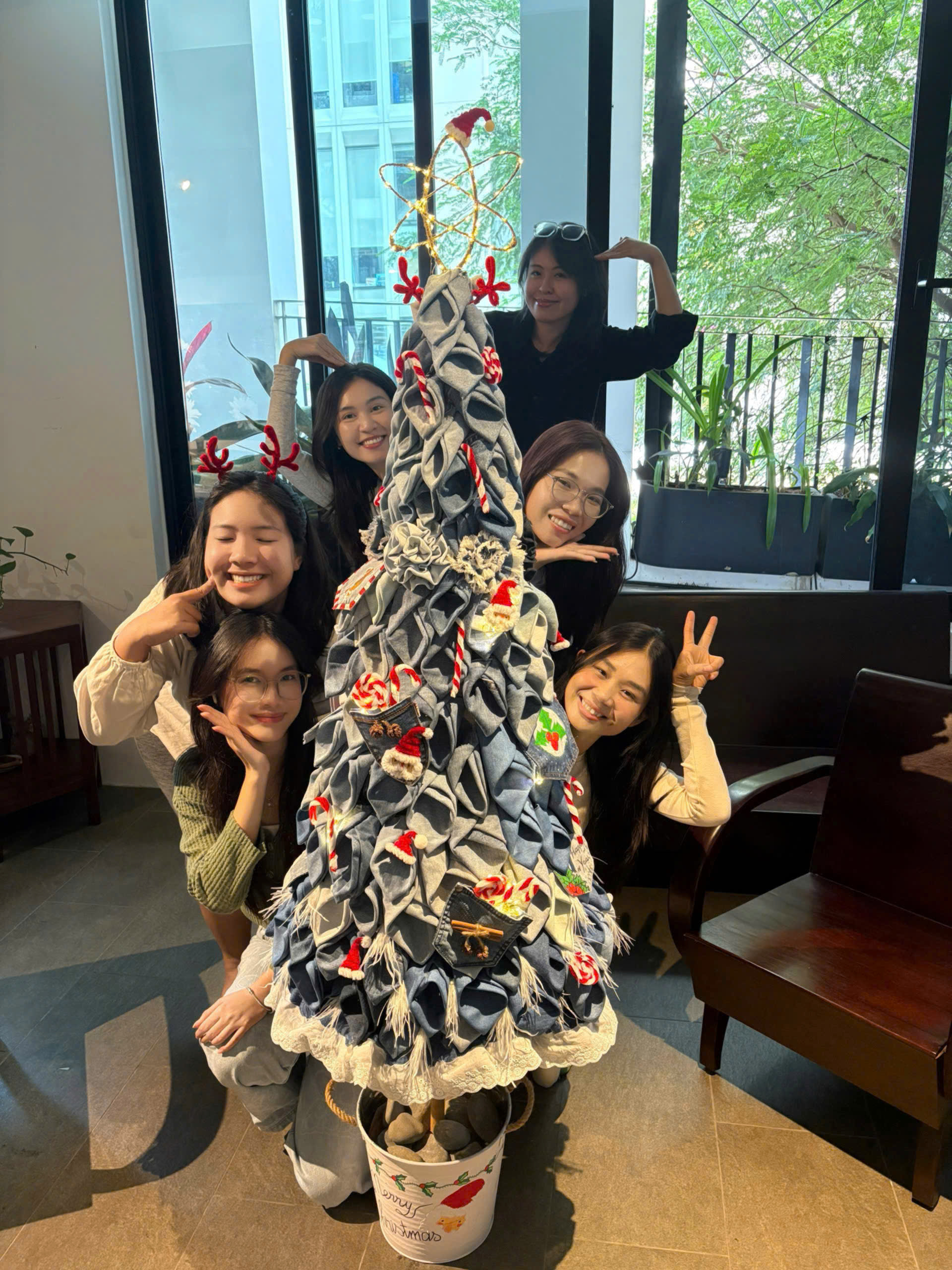
A green Christmas can start from the simplest things! As the festive spirit lights up every corner of the city, we chose to celebrate the holiday season in a more meaningful way: transforming old denim into a creative recycled Christmas tree. This idea came to life when ECO Solutions participated in the Creative Recycled Christmas Tree Contest organized by Amanaki...
Graduated with a degree in Tourism & Hospitality Management, Quyen has a strong background and hands-on experience in the service industry. She has worked in a variety of roles, while also developing a passion for the environment. Quyen joined ECO Solutions from its early stages and became one of the core members who initiated ideas for recycling actions. Beyond her...
This isn’t just a number, it’s a reality that 𝓜𝓲𝓮̂𝓷 𝓡𝓮𝓼𝓽𝓪𝓾𝓻𝓪𝓷𝓽 deeply understands as they step into 2025. Instead of celebrating with decorations or grand openings, they’ve chosen to start the new year with something more profound: pure, fresh air in every breath. At ECO Solutions Vietnam we are honored to partner with Miên Restaurant in their New Year initiative,...
In today’s ESG-driven world, modern offices are doing everything they can to green their workspaces — from replacing plastic cups with reusable bottles to adding potted plants and cutting down on paper usage.But there’s one overlooked “green corner” in the sustainability puzzle: food waste. Every day, your office might be generating kilos of organic waste from morning coffee grounds, fruit...