Search
Close this search box.

Talk to us

News & Events

THE RELATIONSHIP BETWEEN FOOD WASTE AND ESG GOAL

Managing FOOD WASTE is beneficial for any business from: Environmental - Social - Governance

By implementing Source Reduction of Food Waste, businesses not only reduce environmental impact but also contribute to sustainable development goals and uphold ESG (Environmental, Social, Governance) commitments. This can also enhance the company’s reputation and trust among customers and shareholders.


FOOD WASTE RECYCLING SOLUTION

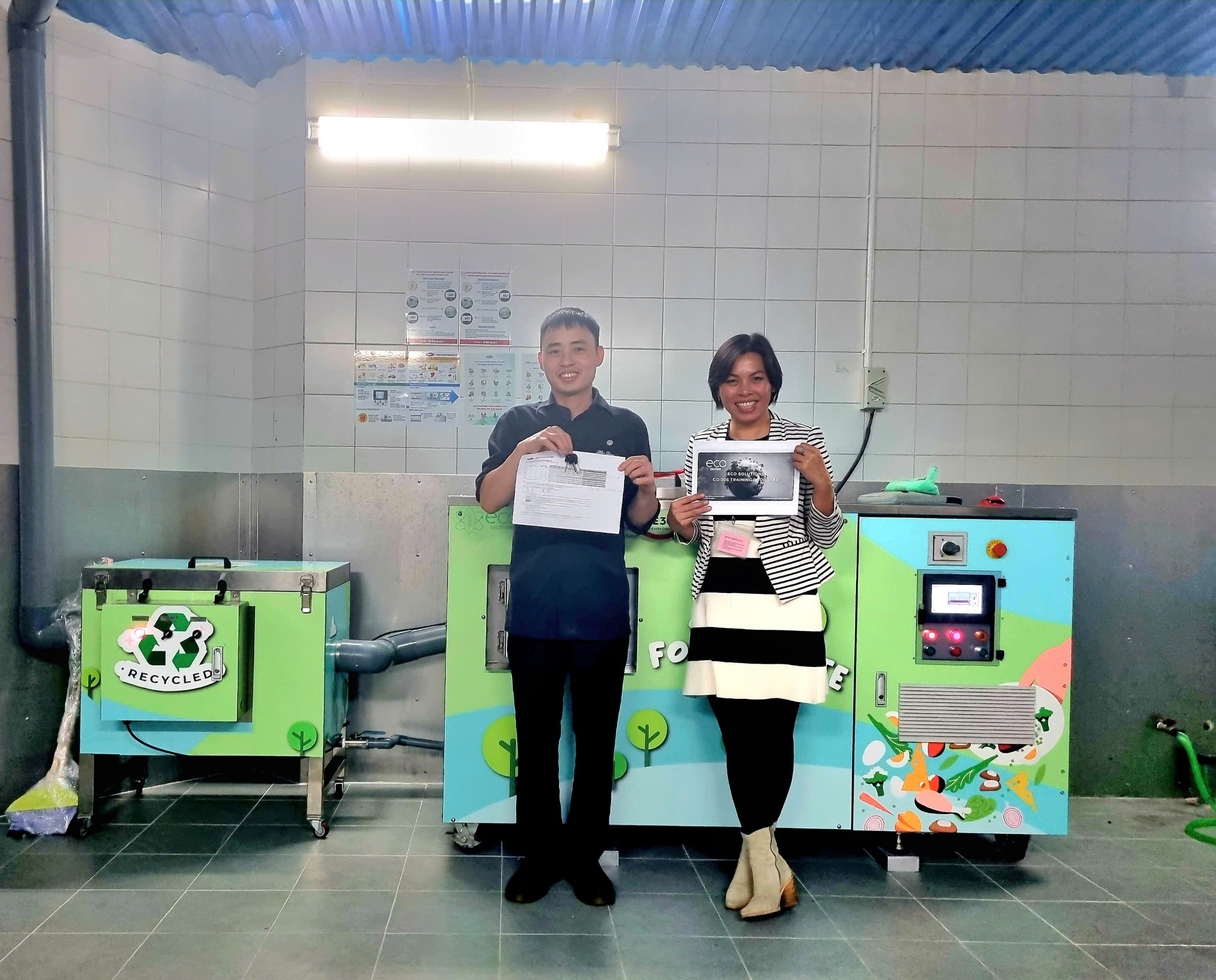
✅ Exclusive Acidulo® Microbial Technology

✅ Quick 24-hour recycling

✅ Produces nutrient-rich organic fertilizer medium

The Current State of Food Waste and Food Loss in Vietnam

According to a report by the World Bank (WB):

Out of every 10 tons of waste in Vietnam, 5-8 tons are biodegradable organic waste, the majority of which is food waste.

According to Saigon Economic Times:

The total loss due to food waste in Vietnam is estimated to be around 8.8 million tons, equivalent to 3.9 billion US dollars, approximately 2% of Vietnam’s GDP.


ESG Goals: Challenges and Opportunities for Businesses

ESG( Environmental, Social, Governance) goals are becoming a critical part of many businesses’ strategies today. It’s not just a commitment to environmental and social protection but also presents numerous challenges and opportunities for enterprises.

How does food waste recycling help businesses achieve ESG goals?

Environment:

Recycling food waste at the source is a crucial solution to minimize negative environmental impacts and optimize waste management. Through this method, businesses can reduce the amount of waste sent to landfills, minimize greenhouse gas emissions from organic waste decomposition, and decrease the energy required for waste transportation and disposal.

Social:

Improving Community Health:

By reducing waste and disease-causing bacteria, recycling food waste at the source helps improve the health and quality of life for the surrounding community.

Climate change significantly impacts human health, causing diseases related to: Respiratory disease, Cardiovascular disease, Insect-borne disease.

Creating Jobs and Education:

This recycling initiative creates employment opportunities for workers involved in sorting and recycling processes, while also raising awareness and educating the community about the importance of environmental protection.

Governance:

Enhancing Public and Partner Visibility:

Publicizing recycling efforts is a highly effective way to promote a company’s image without requiring substantial costs for marketing. This can yield benefits in building relationships with business partners, attracting and retaining investors, and engaging sustainability-focused customers.

Enhancing Business Operations Efficiency:

Employees increasingly seek out companies committed to environmental and social responsibility. This not only attracts talent but can also foster a more positive work environment and increase labor productivity.

Reducing Costs and Optimizing Resources:

Recycling food waste at the source helps reduce waste disposal costs. Instead of transporting large volumes of waste to central processing facilities, processing it on-site saves transportation and processing costs, while optimizing resource utilization.

How Food Waste Impacts the Environment and Businesses?

ENVIRONMENT:

Greenhouse Gas Emissions:

Food waste, when decomposing, generates methane gas, a greenhouse gas more potent than CO2. This contributes to increased greenhouse effect and plays a role in climate change.

Pollution:

In addition to causing air, soil, and water pollution, uncontrolled food waste and nutrient runoff affect human health and wildlife.

Using resources:

The production, transportation, and disposal of food waste require significant water and energy resources.


BUSINESSES:

Operating costs:

Handling and disposing of food waste increases business operating costs, including labor, transportation, processing, and disposal expenses.

Work environment and health:

The odor from food waste can reduce the air quality in workspaces and create discomfort for employees. If not properly managed, food waste can lead to mold and harmful bacteria, affecting the health of employees.

Legal and Compliance:

Many countries have strict regulations regarding the handling of food waste. Non-compliance can lead to fines and adversely affect the reputation of the business.

ECO Solutions partners with businesses to implement ESG by providing food waste recycling solutions

Hot Events

A green Christmas can start from the simplest things! As the festive spirit lights up every corner of the city, we chose to celebrate the holiday season in a more meaningful way: transforming old denim into a creative recycled Christmas tree. This idea came to life when ECO Solutions participated in the Creative Recycled Christmas Tree Contest organized by Amanaki...
ECO Solutions celebrated a double triumph at AusCham 2023: Awarded ESG Of The Year and Businesswoman of the Year! At AusCham Business 2023, ECO Solutions was nominated into the ESG (Environment, Social & Governance) Business of The Year! It was an honor for ECO Solutions to be here at the event that marked our transition from @ECOVietnam to ECO Solutions...
ECO Solutions has been collaborating with the Sustainability Development Department of C.P. Vietnam for the past two years to implement Food Waste Recycling Solutions. Especially with the project “Sorting Waste and Recycling Food Waste into Resources” at C.P. Vietnam’s headquarters in Bien Hoa City - Dong Nai, ECO Solutions has not only provided Oklin Food Waste Recycling Equipment but also...
Unpleasant odors can significantly impact the work environment, customer experience, and company image. To address this issue, ECO Solutions introduces the Odor and Germ Elimination Service, combining efficiency with safety. 💥 Highlights of ECO Solutions' Odor and Germ Elimination Service: 🌱 100% Organic BOS Solution: Certified safe for food contact, ensuring a clean and safe environment for human health and...
[Ho Chi Minh City, May 2025] As ESG becomes an irreversible trend shaping the future of responsible business, many companies are still grappling with a common challenge: how to move beyond declarations and reports to turn ESG into real, tangible action. At the Vietnam ESG Investor Conference, held from May 13 to 14, the answer came not from a keynote...

Other Events

As November comes to a close, ECO Solutions reflects on a month filled with meaningful actions and measurable impacts in line with our commitment to ESG (Environmental, Social, and Governance) values. The activities carried out this month are perfect representations of how seemingly ordinary events can drive significant change when aligned with sustainability principles. "E" Environmental Impact: - Mainetti Vietnam...
In the service industry, we often meticulously care for what customers see: shimmering lighting, luxurious interiors, and well-groomed staff. However, there is an invisible "touchpoint" often overlooked, yet it holds the power to decide whether a customer returns or not: The Scent of the space. Let’s try to put yourself in the customer's shoes: Walking into a luxury European restaurant, but instead of...
After more than 13 years working as Chief Representative of GUNNEBO, Huyen has developed a passion for environmental sustainability. Her journey began with personal research and has since evolved into a mission to inspire positive changes in communities. In January 2021, Huyen first founded ECO Vietnam and was committed to pioneering a closed-loop Food Waste solution at source, especially within...
ARE ENZYMES JUST ANOTHER CHEMICAL? The truth might change how you approach hygiene in hospitality operations. Are harsh chemicals really the solution? In hotel and resort operations, issues such as clogged drains, persistent odors, and hygiene problems in kitchens or guest rooms are often addressed with strong chemical cleaners. However, these quick fixes come with serious risks: Corrosion of pipes...